Destructive Caterpillar Evolves into Vital Pollinator

by Wanda Fuller, Hall County Master Gardener

At four to five inches in length, the hornworm caterpillar can strip a plant’s foliage overnight and leave holes in ripening tomatoes. Less active during the day, it clings, camouflaged, under leaves. At night, with a black or ultraviolet light, it’s easily found glowing in the dark! You can recognize the hornworm by white diagonal markings over its body and its harmless rear-end horn.
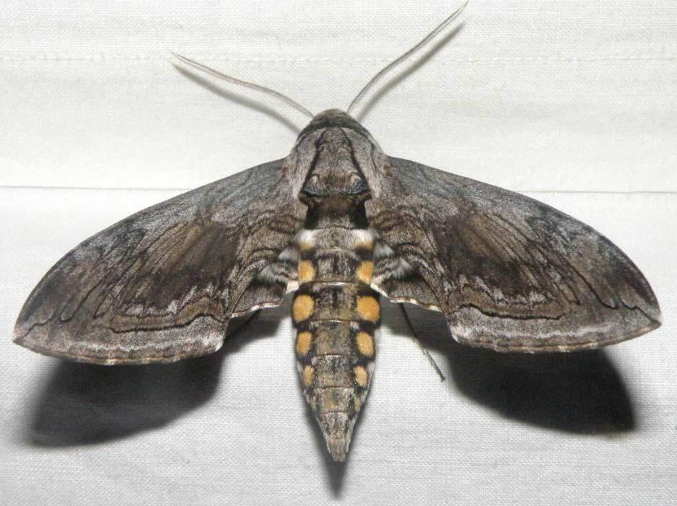
Usually, picking the hornworm caterpillar off and dropping it into soapy water is the only control needed. But first consider that by drowning the caterpillar, you’re killing a future hummingbird moth, aka a five-spotted hawk moth.
Hovering in flight, the hawk moth feeds on floral nectar with the longest proboscis of any moth or butterfly. It is a specialized pollinator for deep-throated tubular flowers and fruit trees. The hawk moth can reach fourteen inches in length, with wing beats rapid enough to produce an audible hum.
This vital pollinator prefers tomatoes as its favorite host plant, but other nightshades, such as horsenettle, will do as a substitute. Three to five days after the hawk moth lays eggs on the underside of leaves, small green worms hatch to double in size every day! Signs of infestation are defoliation of tender top leaves or barrel-shaped green or black droppings on plant leaves.
In 18 to 21 days the hornworm burrows into soil where it changes into a pupa and will hatch into a moth two weeks to a month later.
To control (if you must) hornworm caterpillars:
Hand pick them off. They’re beautifully camouflaged but glow under ultraviolet light.
Plant extra nightshade plants to sacrifice as host plants.
Attract birds, especially blue jays and finches to eat the caterpillars.
Marigold, basil, borage, yarrow, and parsley repel moths.
Till soil at season’s end to disrupt pupae in soil.
Spray soapy water with cayenne pepper over the leaves of plants you don't want damaged.
BT bacillus thuringiensis, a naturally occurring soil bacterium, is effective at targeting caterpillars.


Comments