Groundhog, Woodchuck, Whistle Pig, Marmota Monax

By Wanda Fuller, Hall County Master Gardener

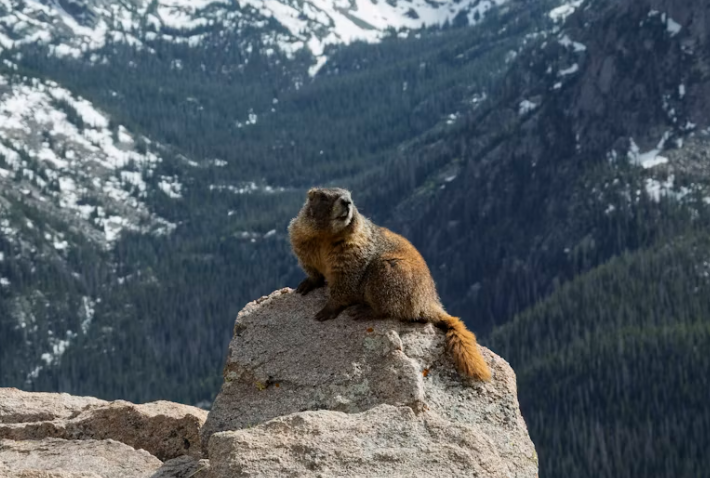
Called many things, this rotund rodent lives only 2 to 3 years but ensures the longevity of her species by producing an annual litter of up to 9 kits, pups, or chucklings.
Even naming this creature is problematic. Try evicting her from your garden!
Think of an appetite big enough to devour a pound of vegetation a day when you weigh no more than nine pounds!
No, cubby. Find your salad elsewhere! I don’t care how cute you are. You are not entitled to a pound of my purple sweet potato vines or tender sunflower sprouts!
This master digger can undermine a building’s foundation. How many cubic feet of earth are moved when a tunnel 14 feet or longer, with chambers 2 to 3 feet below ground, is dug under a shed? Groundhog needs encouragement to move her 2- to 3-acre territory away.
Just go away!
Cubby hog can’t outrun her predators, the fox, coyote, and hawk. She may attempt to escape into her burrow. But her primary defense isn’t her burrow, sharp claws, or rapidly growing incisors; it’s her exceptionally keen sense of smell. Knowledge of her sensitive nose can be used to make any property unlivable to her.
Strong smells. She hates strong smells. Irritate her bloodhound-like nose. That’s kinder than a trap when release isn’t legally allowed because she is a rabies vector species.
Some stinky formulas:
1 tablespoon cayenne pepper, 5 crushed garlic cloves steeped overnight in a gallon of water. Spray into burrow and around garden.
Use human or pet hair clippings. Both are predator scents to groundhog. Birds may use the hair and fur for their nests.
Pet waste. Again, it’s the scent that frightens the digger. Don’t use pet excrement near your veggies. Human or predator (fox or coyote) urine works too.
Vinegar- or ammonia-soaked rags in a plastic bag with holes punched. Place inside the burrow. Repeat every few days. Or pour ammonia directly down into the burrow.
Alternatives for when you tire of reapplying smelly deterrents, since these scents wash away with rain and time:
Try spraying 1 part castor oil with 3 parts soapy water over burrow entrances and around vegetable beds. The spray irritates the groundhog’s digestive track and makes the soil taste unpleasant.
Motion and noise deterrents, even windchimes and pinwheels. Solar powered vibration stakes frighten.
Destroy cover – tall grass or brush piles the groundhog could hide in.
Permanent Solution: Build a groundhog-proof fence:
No easy task, as this girl can dig, climb, and swim. It can help to refer to instructional videos online.
The most important points for installing groundhog-proof a fence are:
After digging a trench around the outside of your tall existing fence, bend 14-gauge galvanized welded wire or hardwire cloth into an L-shape extending outward away from the garden. Backfill the trench with gravel and packed dirt.
Leave the top 12” of fence floppy and unattached at the top and bent at a 45-degree outward angle to prevent climbing.
Once you’ve won the battle:
Be careful around abandoned holes and tunnels, which can be treacherous— a broken ankle in the making.
Send pictures of adorable groundhogs cavorting around.



Comments